
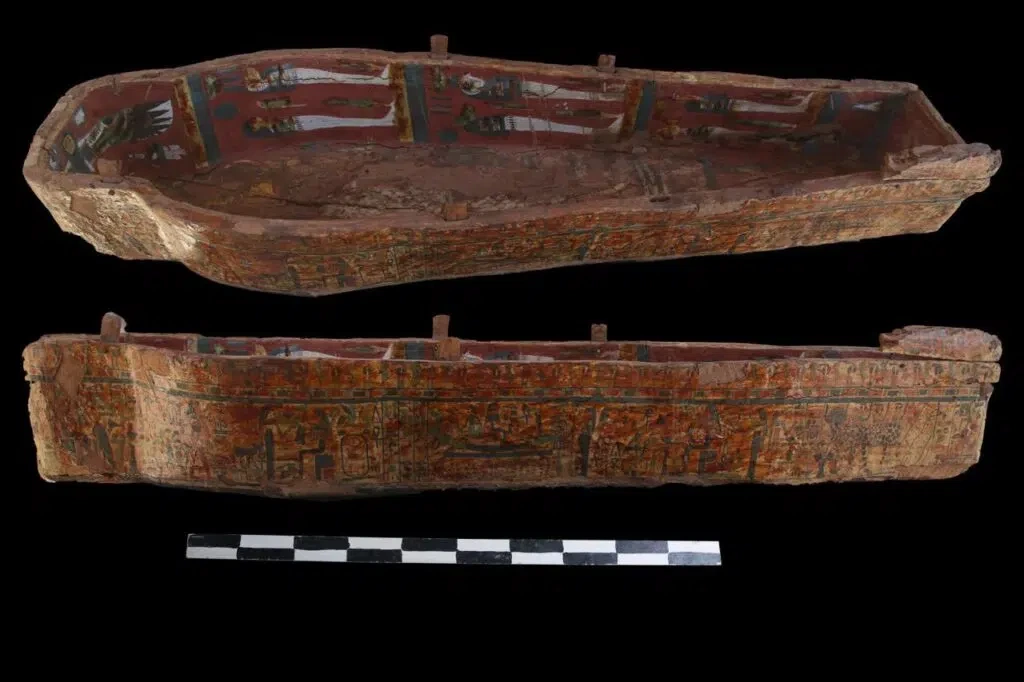
In early 2026, Egyptian archaeologists discovered a significant find on Luxor’s West Bank. The Ministry of Tourism and Antiquities announced that they found 22 colorful wooden coffins and eight sealed papyri inside a large ceramic jar. Officials described the papyri as an “information goldmine,” and that might even be an understatement.
What Was Found — and Where
The discovery took place in the southwestern corner of the Tomb of Seneb in Luxor’s El‑Asasif Necropolis. This area was a burial site for priests, officials, and temple staff for centuries. The excavation team consists of Egypt’s Supreme Council of Antiquities and the Zahi Hawass Foundation for Archaeology and Heritage.
Researchers found the 22 coffins arranged in ten rows inside a chamber carved into the rock. The ancient embalmers had separated the lids from the coffins to fit as many burials as possible in the space. Along with the coffins, the team discovered: 22 painted wooden coffins, each with a mummy inside; 8 sealed papyri of different sizes in a ceramic vessel; and pottery vessels believed to have been used for mummification.
Most coffins lack personal names. Instead, they repeat the title “Singer of Amun,” suggesting these coffins belonged to women who shared this important religious role.
Who Were the Singers of Amun?
The “Singers of Amun” were women employed to perform sacred music and rituals at Karnak Temple, a major religious site in Thebes. They played important roles in festivals and ceremonies and used instruments like the sistrum and menat during worship. Their music was not just decoration; it was a way to please the gods and maintain order. These women were essential to temple life. They held formal positions and controlled significant land and power in Upper Egypt. Many came from wealthy families linked to the priesthood, and their presence in a prominent burial site like Asasif reflects their status. This discovery is unique not only because of the number of burials but also because of its focus on a single professional title. Researchers believe this find can help us learn more about the roles women in ancient Egypt played in temples and how they shaped their identities and burial practices.
The World They Lived In: Egypt’s Third Intermediate Period
The coffins come from Egypt’s Third Intermediate Period (around 1070–664 BCE), which includes Dynasties 21 to 25. This period doesn’t get as much attention as the New Kingdom or the age of the pyramids, but it is important.
This era started after the death of Ramesses XI and marked the end of the New Kingdom. Power became divided. Northern centers, like Tanis, gained influence, while Thebes in the south was controlled by the powerful priesthood of Amun. Foreign dynasties eventually ruled Egypt. Despite this, the religious institutions at Karnak continued to thrive and grew in power, maintaining their teams of singers and chantresses.
The way these coffins were buried fits the period well. Burial practices during this time showed a stronger focus on group identity tied to roles in society rather than just personal status. Being buried as a Singer of Amun held as much significance as being buried under your own name.
The Sealed Papyri: The Find Within the Find
While the coffins attract the most attention, the papyri could be the true highlight. Eight scrolls of various sizes were found in a single ceramic jar, some sealed with clay and untouched for nearly 3,000 years. What they contain remains unknown. Scholars think they might include:
- Hymns and religious texts for temple ceremonies
- Administrative records related to temple staff
- Funerary texts like spells, prayers, or personal versions of Book of the Dead passages
- Biographical details that could help identify the people in these anonymous coffins
Conservation and translation will take time, but the results could be significant. If the papyri explain why so many Singers of Amun were buried together, they could change our understanding of religious identity in this politically unstable time in ancient Egypt.
What Happens Next
Conservators have started urgent stabilization work. Painted plaster and ancient wood can deteriorate quickly when exposed to air, so the team is reinforcing weak areas, preserving paint layers, and cleaning carefully while keeping the original colors intact. Each piece has been fully photographed and documented before being moved to storage.
At the same time, researchers are looking for the original tombs where these coffins may have come from. This cache seems to have been a secondary resting place, not the first burial site for these women.
A Chamber Full of Voices, Still Waiting to Be Heard
Three thousand years ago, a group of women sang for the gods in the great temple at Karnak. We don’t know their names or what their music sounded like, but we know their titles, status, and where they were laid to rest—arranged in careful rows in the dark beneath the Luxor desert, along with eight sealed scrolls that may reveal everything.
As translation and analysis begin, this cache could provide a significant glimpse into women’s religious life in the ancient world. The choir has been silent for many years. Soon, it may finally have a voice.