Luxor UNESCO Guide: Ancient Thebes with Its Necropolis
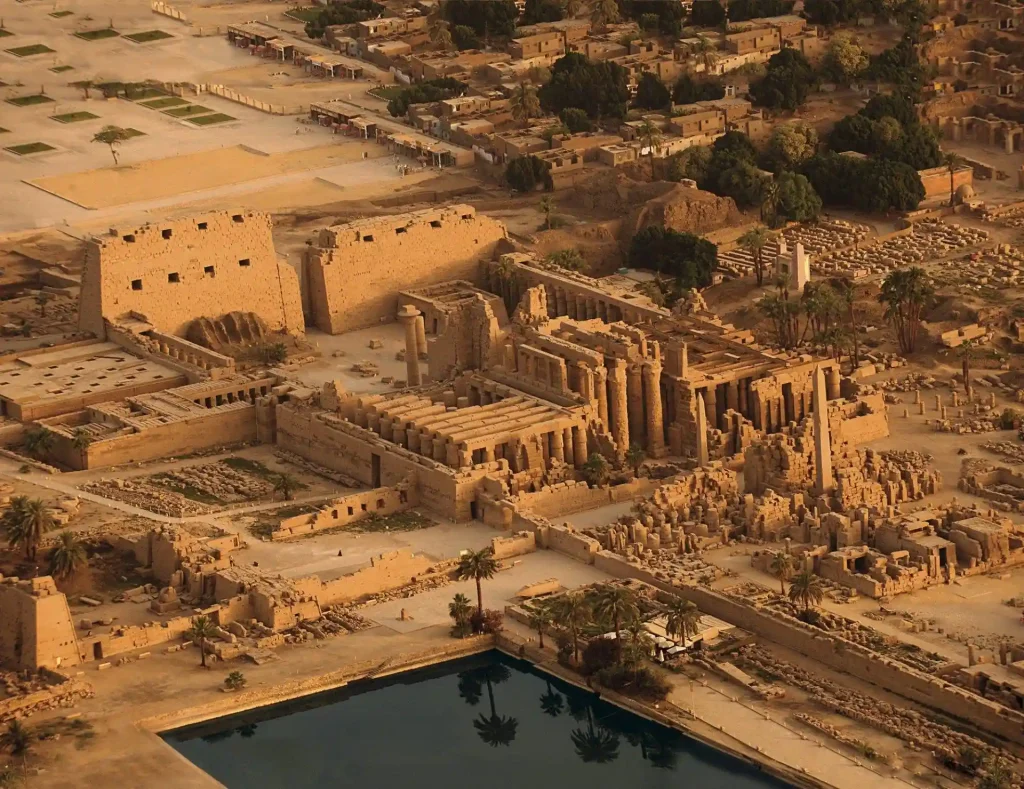
Traveling 640 kilometers south of Cairo, following the life-giving ribbon of the Nile, until you reach a place where the line between the present and the ancient world doesn’t just blur—it disappears. The site is considered one of the most important archaeological areas in the world, often called the “world’s largest open-air museum”.
Welcome to Luxor, or as the world officially knows it, Ancient Thebes with its Necropolis.
Inscribed as a UNESCO World Heritage site in 1979, this is not just an archaeological site; it is a testimony to the height of Egyptian civilization. At its peak, Thebes was the capital of an empire that stretched from the Euphrates in the north all the way to northern Sudan. Today, it remains one of the most spectacular ensembles of human history ever constructed.
A Tale of Two Banks: Living and Eternal
The geography of Ancient Thebes is deeply symbolic. The Nile River splits the site into two distinct spiritual and functional zones. This “serial property” covers a massive 7,390 hectares, protecting the balance between the sun’s rise and its set.
The East Bank (The Land of the Living): This was the heart of the ancient city, housing a population of perhaps 50,000 people. Today, it’s where you’ll find the modern city of Luxor and the two gargantuan religious structures that defined ancient power: Karnak and Luxor Temple.
The West Bank (The City of the Dead): Known as the Theban Necropolis, this 10 km² area was dedicated to the afterlife. It is a labyrinth of thousands of tombs, mortuary temples, and the villages of the very artisans who built them.
Luxor Tours & Activities
Looking to save some costs on your travel? Why not join a shared group tour to explore Luxor, Egypt? Here are some activities you might be interested in:
The East Bank: Monuments to the Divine
The East Bank was the center of religious and political life. The temples here were not just places of worship; they were the homes of priesthoods that rivaled the Pharaohs in wealth and influence.
1. The Karnak Temple Complex
Karnak is less of a “temple” and more of a “metropolis of gods.” It is one of the largest religious structures ever constructed.
The Great Hypostyle Hall: This is the site’s most famous feature. Begun by Seti I and completed by Ramses II, this hall covers 5,000 square meters.
The Columns: You’ll stand beneath 134 massive columns. The central nave features columns reaching 20.4 meters high with a diameter of 3.4 meters. Looking up at the remaining paint on the capitals is a true “neck-craning” moment.
The Sacred Lake: A place for ritual purification that still mirrors the surrounding ruins today.
Southern Sacred Lake: Keep an eye out for the newly unearthed sacred lake at the Montu Temple precinct, a groundbreaking discovery from early 2026 that adds a new chapter to Karnak’s history.
2. Luxor Temple
Located right in the center of the living city, the Temple of Amenophis III is considered one of the most refined masterpieces of Egyptian architecture.
Architectural Refinement: Built in the 14th century BCE, it shows a level of elegance and symmetry that is distinct from the raw power of Karnak.
The Avenue of Sphinxes: This 2.7-kilometer path originally connected Karnak to Luxor Temple. Modern restoration efforts are currently working to fully integrate this into the site’s boundaries, allowing visitors to walk the same path the ancient processions once took.
The West Bank: The Grand Necropolis
Crossing the Nile to the West Bank is like stepping into a different dimension. Here, the “City of the Dead” holds some of the most precious treasures of antiquity.
1. Valley of the Kings
Between 1500 and 1000 BCE, the Pharaohs were buried in rock-cut tombs hidden within the limestone hills.
Tutankhamun’s Tomb: Though small, its discovery changed archaeology forever.
Artistic Documentary: These tombs aren’t just for show; the inscriptions and figurative representations provide a documentary view of Egyptian life, religion, and their interactions with neighbors like the Hittites and Syrians.
2. Valley of the Queens
Specifically known for the Tomb of Queen Nefertari, often called the “Sistine Chapel of Ancient Egypt” for its vivid, perfectly preserved colors.
3. The Mortuary Temple of Queen Hatshepsut
Located at Deir El Bahari, this temple is a stunning departure from traditional Egyptian design.
Design: It features immense porticos and superimposed terraces that seem to grow directly out of the mountainside.
The Punt Reliefs: Don’t miss the frescoes that trace Hatshepsut’s famous expedition to the Land of Punt, a vivid piece of 3,500-year-old travel journalism.
4. The Village of the Artisans (Deir el-Medina)
This site provides a rare glimpse into the lives of the “middle class”—the artists and workers who created the royal tombs. Their own houses and shrines offer a more human, relatable side of ancient history.
5. Medinet Habu (Temple of Ramesses III)
Arguably the best-preserved temple on the West Bank, famous for its deep-cut reliefs depicting the defeat of the “Sea Peoples.”
6. The Ramesseum
The memorial temple of Ramesses II (The Great). Even in its ruined state, the fallen colossus of the king (which inspired the poem Ozymandias) remains breathtaking.
7. Colossi of Memnon
Two 18-meter-tall statues of Amenhotep III. These are the only remnants of what was once the largest mortuary temple in the Theban necropolis.
Why Luxor is a UNESCO Masterpiece
UNESCO uses specific “Criteria” to determine what makes a site part of our global heritage. Luxor hits three major marks:
Criterion (i): The temples of Karnak and Luxor are “truly colossal complexes” that represent some of the most fascinating realizations of Antiquity.
Criterion (iii): These monuments serve as unique and unequaled testimony to the antiquity of the Theban ensembles.
Criterion (vi): The site is a material witness to the history of Egyptian civilization from the Middle Kingdom all the way to the beginning of the Christian era.
Preserving the Past: Authenticity and Integrity
When you visit Luxor, you are seeing the real deal. Experts estimate that 80% of the ancient form and material has been preserved. While the “vicissitudes of history” (a fancy way of saying time and conflict) have caused damage, the perfection of ancient building techniques has allowed these structures to resist natural forces for millennia.
Current Challenges and Management:
Ongoing Restoration: Large-scale projects are currently rehabilitating the sites, ensuring that any interventions are reversible and follow international conservation principles.
Modern Pressures: The site is under constant management to protect it from rising groundwater, flooding, and the pressures of urban development from the modern city of Luxor.
The Master Plan: A comprehensive management plan is in development to unify the twelve major archaeological sites under one protection strategy.
Practical Tips for Your Visit
To make the most of this World Heritage site, keep these “experienced traveler” tips in mind:
Respect the “Golden Hours”: Visit the East Bank temples (especially Luxor Temple) at sunset. The lighting is magical, and the crowds are thinner.
Start Early on the West Bank: The Valley of the Kings can get incredibly hot. Aim to be there when the gates open at 6:00 AM.
The “Luxor Pass”: If you plan on spending 3-5 days here, look into the Luxor Pass. It covers all sites and can save you a significant amount of money on entrance fees.
Look Beyond the Main Sites: While Karnak is a must, don’t ignore the Colossi of Memnon or the Ramesseum. They offer a quieter, more contemplative atmosphere.
A Pilgrimage to Human Achievement
Visiting Luxor is more than just checking a destination off a bucket list. It is a pilgrimage to a city that defined how humans viewed the gods, the afterlife, and their own place in the universe. From the 134 columns of Karnak to the hidden depths of the Valley of the Kings, Ancient Thebes remains an “ensemble of unique splendor.”
As you stand in the shadow of a 3,000-year-old obelisk, you aren’t just a tourist—you are part of the ongoing story of a site that has seen the rise and fall of empires, yet still stands to tell the tale.
Got a Question?
F.A.Qs
Luxor was inscribed in 1979 based on three specific UNESCO criteria:
Criterion (i): It represents a unique artistic achievement (e.g., the Great Hypostyle Hall at Karnak and the tomb paintings).
Criterion (iii): It bears exceptional testimony to the Egyptian civilization at its height.
Criterion (vi): It is directly associated with events, ideas, and beliefs of outstanding universal significance (ancient religious practices and funerary rites).
Ancient Thebes is a “serial property,” meaning it isn’t just one single building but a collection of sites that together form a whole. It includes:
East Bank: Karnak and Luxor Temples.
West Bank: The Valley of the Kings, Valley of the Queens, Deir el-Bahari (Hatshepsut), Medinet Habu, the Ramesseum, and the Colossi of Memnon.
According to UNESCO’s State of Conservation reports, the site faces several ongoing challenges:
Environmental: Seasonal flooding risks and the rising level of underground water (though major dewatering projects have significantly mitigated this).
Human Impact: Urban encroachment from modern Luxor, the impact of heavy tourism (humidity in tombs), and infrastructure development.
UNESCO sites include a core zone (the ruins themselves) and a buffer zone (the surrounding 443.55 hectares). The buffer zone is a layer of protection where construction and development are strictly regulated to ensure the “visual integrity” of the monuments is not spoiled by modern skyscrapers or factories.
UNESCO and the SCA use a rotation system for the tombs in the Valley of the Kings. This is a conservation strategy to limit the amount of carbon dioxide and humidity (from breath and sweat) that can damage the ancient wall paintings. Closed tombs are undergoing “restoration and stabilization” to ensure their survival for future generations.
Did you know that
By purchasing through our links, you support us at no additional cost.
Thank you for your support. ♥️