Theban necropolis
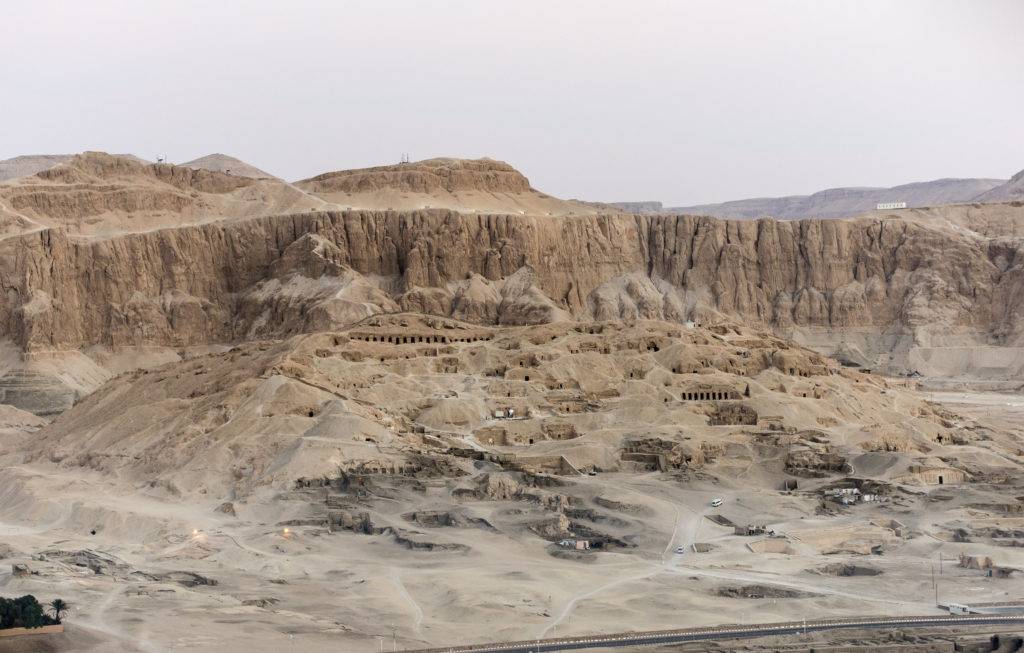
Beneath the golden cliffs of Luxor’s west bank lies the Theban Necropolis, a silent city built for eternity. This vast open-air archive reveals ancient Egypt’s greatest secrets, where pharaohs sought immortality in hidden tombs and artisans captured daily life in vivid colors. Unlike the towering pyramids, these concealed tombs are protected by mountains and priests who preserved their sanctity. Walking through this necropolis reveals a civilization deeply obsessed with the afterlife, where politics, religion, and art converge in an eternal dialogue between the living and the dead.
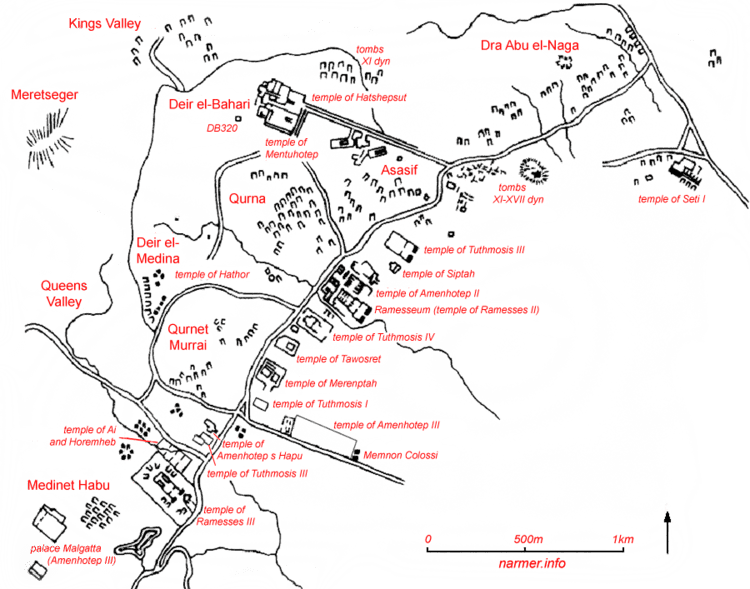
What is the Theban Necropolis?
The Theban Necropolis is a vast funerary landscape stretching across Luxor’s West Bank. It includes:
- Royal tombs in the Valleys of the Kings and Queens.
- Mortuary temples dedicated to deceased pharaohs.
- Noble cemeteries are spread across several zones.
- Deir el‑Medina, the village of the tomb builders.
- Hidden caches like the Royal Cache and Bab el‑Gasus.
Key Facts
- Timeline: Primarily used during the New Kingdom (1550–1070 BCE), though burials began earlier in the Middle Kingdom.
- Symbolism: The west bank of the Nile was associated with the setting sun and the realm of Osiris, god of the underworld.
- UNESCO Status: Part of the World Heritage listing “Ancient Thebes with its Necropolis.”
Luxor Tours & Activities
Looking to save some costs on your travel? Why not join a shared group tour to explore Luxor, Egypt? Here are some activities you might be interested in:
Mortuary Temples of the Theban Necropolis
The Theban Necropolis is a city of tombs and a home to large temples built to honor the dead. These are called mortuary temples. They were created for the worship of pharaohs and were intended to ensure that people offered food, drink, and prayers, so that their spirits would have what they needed in the afterlife. Unlike tombs, which were often hidden in cliffs, mortuary temples were built to be visible and accessible. They served as strong reminders of royal power.
Temple of Hatshepsut at Deir el-Bahri
The Temple of Hatshepsut, an architectural masterpiece, rises in terraces against Deir el-Bahri’s cliffs. Dedicated to Egypt’s most renowned female pharaoh, it features broad ramps flanked by colonnades with reliefs showcasing her divine birth and expedition to Punt.
– Architectural highlights: Three terraces seamlessly integrated into the cliffs.
– Artistic treasures: Scenes of exotic animals and incense trees from Punt.
Medinet Habu – The Temple of Ramses III
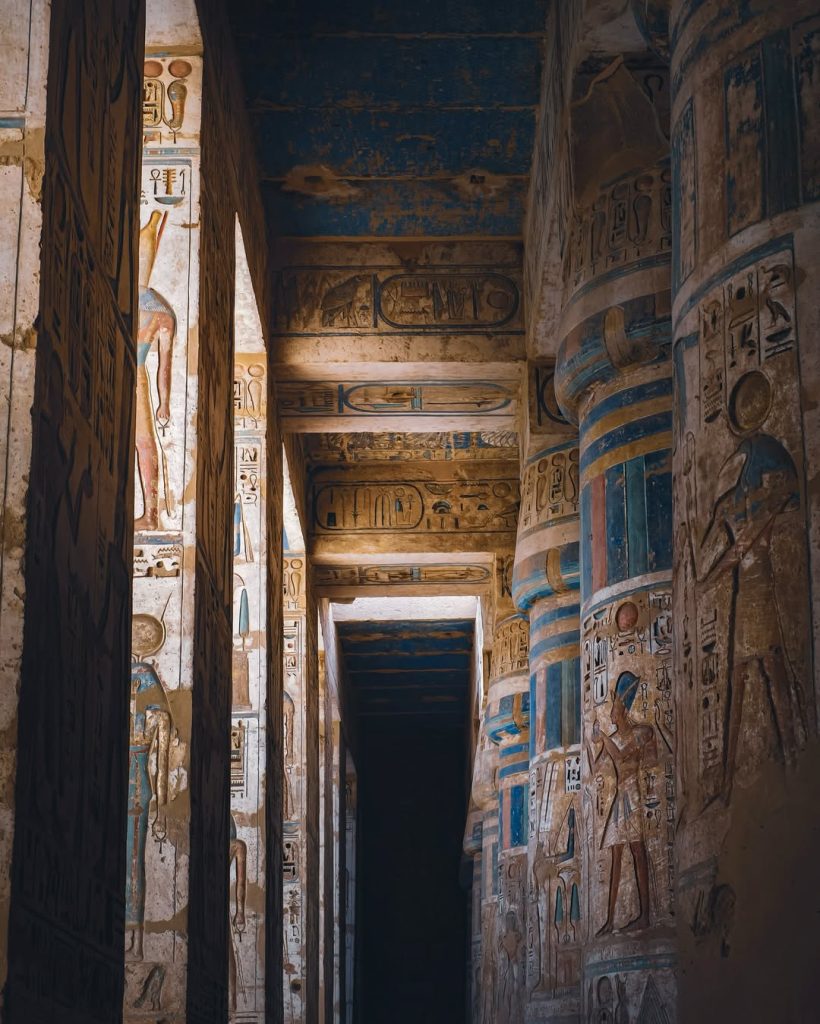
Medinet Habu, built by Ramses III, is a complex of imposing structures known for its exceptional preservation. The towering pylons boast vivid reliefs of the pharaoh’s battles against the Sea Peoples, serving as both history and propaganda.
– Architectural highlights: Massive pylons and pillared halls.
– Artistic treasures: Colorful reliefs of battle scenes and rituals.
The Ramesseum – Temple of Ramses II
The Ramesseum, the mortuary temple of Ramses II, shows the scale of his ambition despite its ruins. The colossal fallen statue, over 18 meters tall, inspired the poem “Ozymandias.”
– Architectural highlights: Hypostyle halls and colossal statues.
– Artistic treasures: Reliefs depicting the Battle of Kadesh.
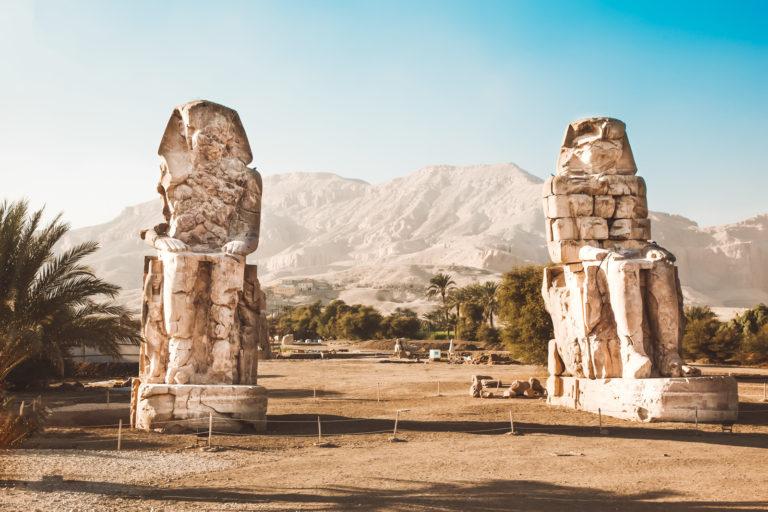
The Colossi of Memnon – Guardians of the Necropolis
The Colossi of Memnon are two massive statues of Amenhotep III. Once part of his mortuary temple, one statue was famous for “singing” at dawn due to cracks in the stone.
– Architectural highlights: Each statue stands about 18 meters tall.

Other Mortuary Temples Worth Noting
While the above are the most famous, the necropolis is dotted with other mortuary temples that are often overlooked but worth visiting for enthusiasts:
- Temple of Seti I: Known for its refined reliefs and connection to the Valley of the Kings.
- Temple of Merneptah: Built with blocks recycled from Amenhotep III’s temple, offering a fascinating glimpse into ancient reuse.
- Temple of Amenhotep II and Mentuhotep II: Smaller but historically significant, bridging Middle Kingdom and New Kingdom traditions.
The Royal Necropolis: Valleys of Kings and Queens
The beating heart of the Theban Necropolis is its royal burial grounds, where pharaohs and their families prepared for eternity. Unlike the pyramids of the Old Kingdom, which stood as monumental beacons on the horizon, the royal tombs of Thebes were deliberately hidden in the desert cliffs. Concealment was part of the strategy: to protect the treasures and sacred texts buried with the kings from tomb robbers. Yet even in secrecy, these tombs were designed to dazzle—with walls covered in brilliant colors, sacred spells, and scenes of the afterlife.
Valley of the Kings: Pharaohs’ Eternal Resting Place
The Valley of the Kings is Egypt’s renowned royal cemetery, housing over 63 tombs of New Kingdom rulers, from Thutmose I to Ramses XI. Each tomb symbolizes a journey through the underworld, leading pharaohs to eternal harmony with the gods.
Key highlights for visitors include:
– Tutankhamun’s Tomb (KV62): Discovered by Howard Carter in 1922, it revealed remarkable treasures.
– Tomb of Seti I (KV17): Long and richly adorned, featuring exquisite reliefs and astronomical ceilings.
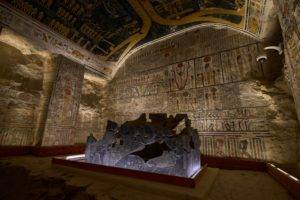
– Tomb of Ramses VI (KV9): Notable for its cosmic ceiling, illustrating the goddess Nut.
Traveler tip: A standard ticket allows access to three tombs of your choice, but special tickets are needed for Tutankhamun, Seti I, and Ramses VI, with tomb rotations for preservation.

Valley of the Queens: The Beauty of Nefertari
The Valley of the Queens, located south of the Valley of the Kings, is where royal wives and children were buried. Despite its smaller size, its artistry is stunning.
Tomb of Queen Nefertari (QV66): Known as the “Sistine Chapel of Ancient Egypt,” this tomb features exquisite colors and details. Nefertari, the wife of Ramses II, is depicted playing games with the gods.
Other tombs provide insights into the lives of royal children.
Traveler tip: Access to Nefertari’s tomb is currently restricted.
The Tombs of the Nobles
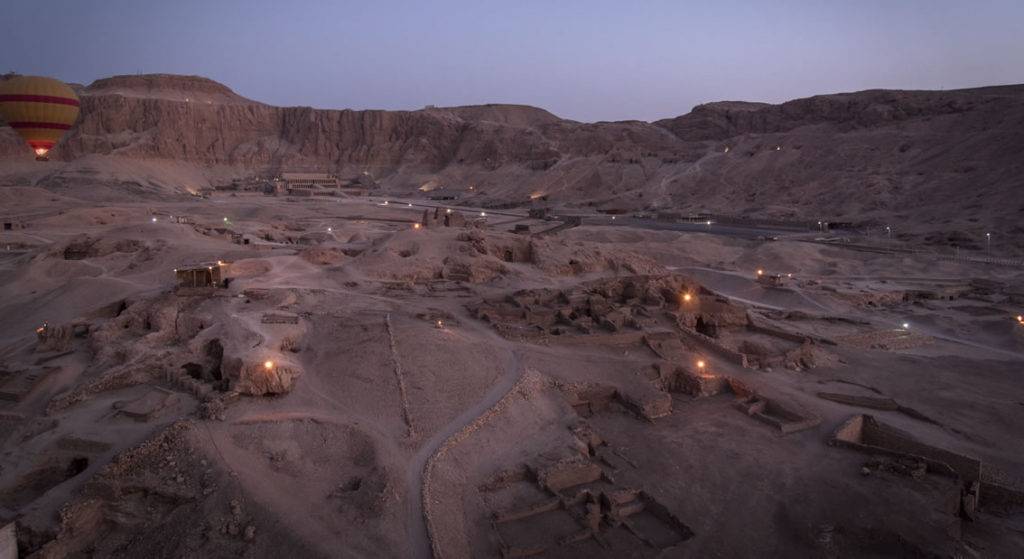
The Tombs of the Nobles, located in various cemeteries as burial sites for high officials, priests, and administrators from the New Kingdom.
El-Assasif: Known for massive tombs of high officials from the 25th and 26th Dynasties, including the tomb of Montuemhat.
El-Khokha: A rich necropolis featuring exquisite wall paintings in tombs like those of Neferonpet (TT49) and Nefersekheru (TT296).
El-Tarif: One of the oldest cemeteries, known for large rock-cut chapels from the Middle Kingdom.
Dra’ Abu el-Naga’: A burial ground for royals and nobles during the 17th Dynasty.
Qurnet Murai: Home to tombs featuring temple rituals and offerings from the Ramesside period.
Sheikh Abd el-Qurna: The most famous of the noble cemeteries, it contains some of the finest tombs from the New Kingdom.
Masterpieces to see:
– Tomb of Rekhmire (TT100): Decorated with tribute scenes from foreign lands.
– Tomb of Sennefer (TT96): Known for its famous “grapevine ceiling.”
– Tomb of Ramose (TT55): A blend of traditional and Amarna-style art.

Deir el‑Medina: The Village of the Tomb Builders
Deir el‑Medina, a walled village in a desert valley, was the home of artisans who carved and decorated royal tombs for nearly 500 years. This well-documented community provides remarkable insights into daily life through excavated houses, chapels, and thousands of inscribed limestone flakes.
The artisans’ tombs, such as the Tomb of Sennedjem (TT1) and the Tomb of Pashedu (TT3), showcase vibrant scenes of paradise and devotion to gods like Osiris and Anubis. Many tombs also depict family moments and agricultural work, offering a personal glimpse into their lives.
These artworks illustrate that artisans created meaningful masterpieces for themselves, filled with love, humor, and hope, not just for the kings.
The Great Caches of the Theban Necropolis
The Royal Cache (TT320)
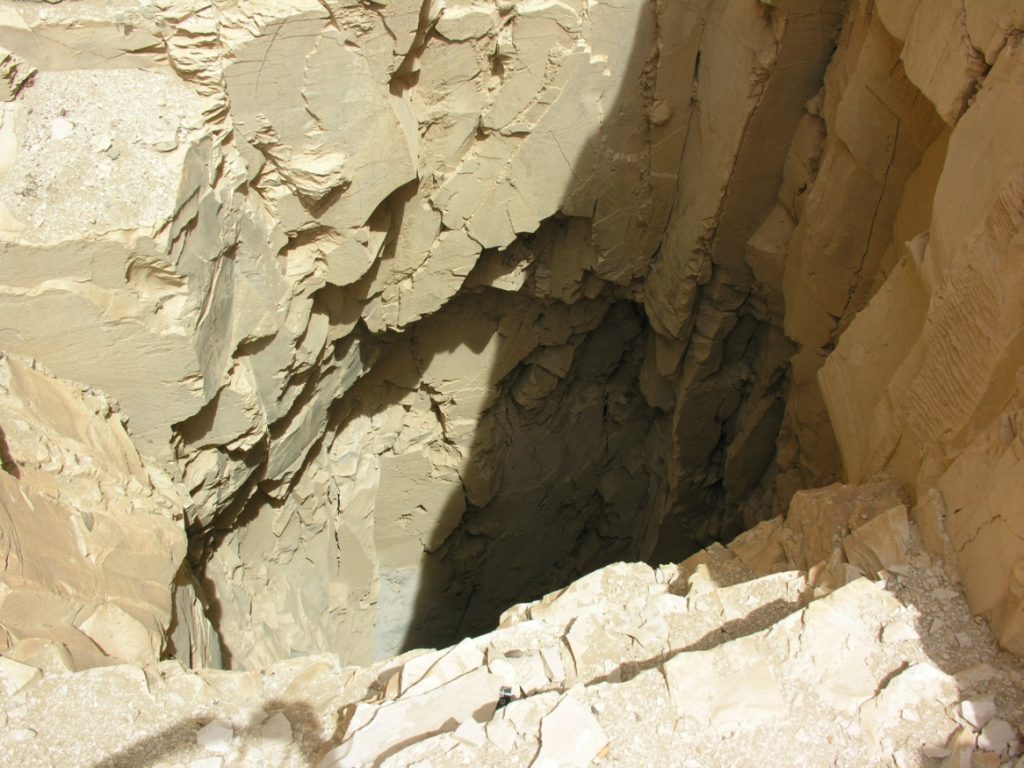
Discovered in 1881 at Deir el-Bahari, the Royal Cache (tomb TT320) is a significant find in Egyptology. It contains over 50 royal mummies, including notable pharaohs like Seqenenre Tao, Ahmose I, Thutmose III, and Ramses II. During the 21st Dynasty, priests of Amun reburied these kings and queens to protect them from tomb robbing, gathering their mummies into a hidden shaft. Although local robbers first found it, the cache was later officially excavated, and many mummies can now be seen in the National Museum of Egyptian Civilization. While TT320 is closed to visitors, its story enhances a trip to nearby Hatshepsut’s temple, just meters from where Egypt’s great rulers lay hidden for centuries.
Bab el‑Gasus (The Gate of the Priests)
In 1891, a remarkable discovery was made at Hatshepsut’s temple in Deir el-Bahari, known as Bab el-Gasus, or the “Gate of the Priests.” This cache contained the collective burial of 153 priests and priestesses of Amun from the 21st Dynasty, including over 200 coffins, nearly 100 papyrus scrolls, 110 boxes of ushabtis, and numerous stelae and ritual objects. The burial served as a protective measure by the powerful Amun priesthood. Artifacts from Bab el-Gasus are now housed in museums worldwide, with some displayed in Italy, France, and the Netherlands. Although the tomb is closed to visitors, it underscores the significance of the Amun priesthood in Luxor’s history, especially at Medinet Habu and Karnak.
Got a Question?
F.A.Qs
The Theban Necropolis is the vast funerary landscape on the west bank of the Nile at Luxor. It includes the Valleys of the Kings and Queens, mortuary temples, noble cemeteries, the artisan village of Deir el‑Medina, and hidden caches of mummies such as TT320 and Bab el‑Gasus.
Its earliest burials date to the Middle Kingdom (c. 2000 BCE), but it flourished during the New Kingdom (1550–1070 BCE). Use continued into the Late Period, especially at cemeteries like El‑Assasif.
The west bank symbolized the land of the dead, associated with the setting sun and the god Osiris. The cliffs also provided natural protection and a pyramid‑shaped peak, al‑Qurn, which echoed older royal traditions.
Mortuary temples were built to honor deceased pharaohs and sustain their cults. They were centers of ritual offerings and political propaganda. Examples include Hatshepsut’s temple at Deir el‑Bahri and Medinet Habu of Ramses III.
Unlike the pyramids of Giza, the Theban Necropolis combines hidden cliff‑cut tombs, monumental mortuary temples, elite cemeteries, and an artisan village. It reflects both the grandeur of kingship and the intimate lives of those who served it.
Did you know that
By purchasing through our links, you support us at no additional cost.
Thank you for your support. ♥️