
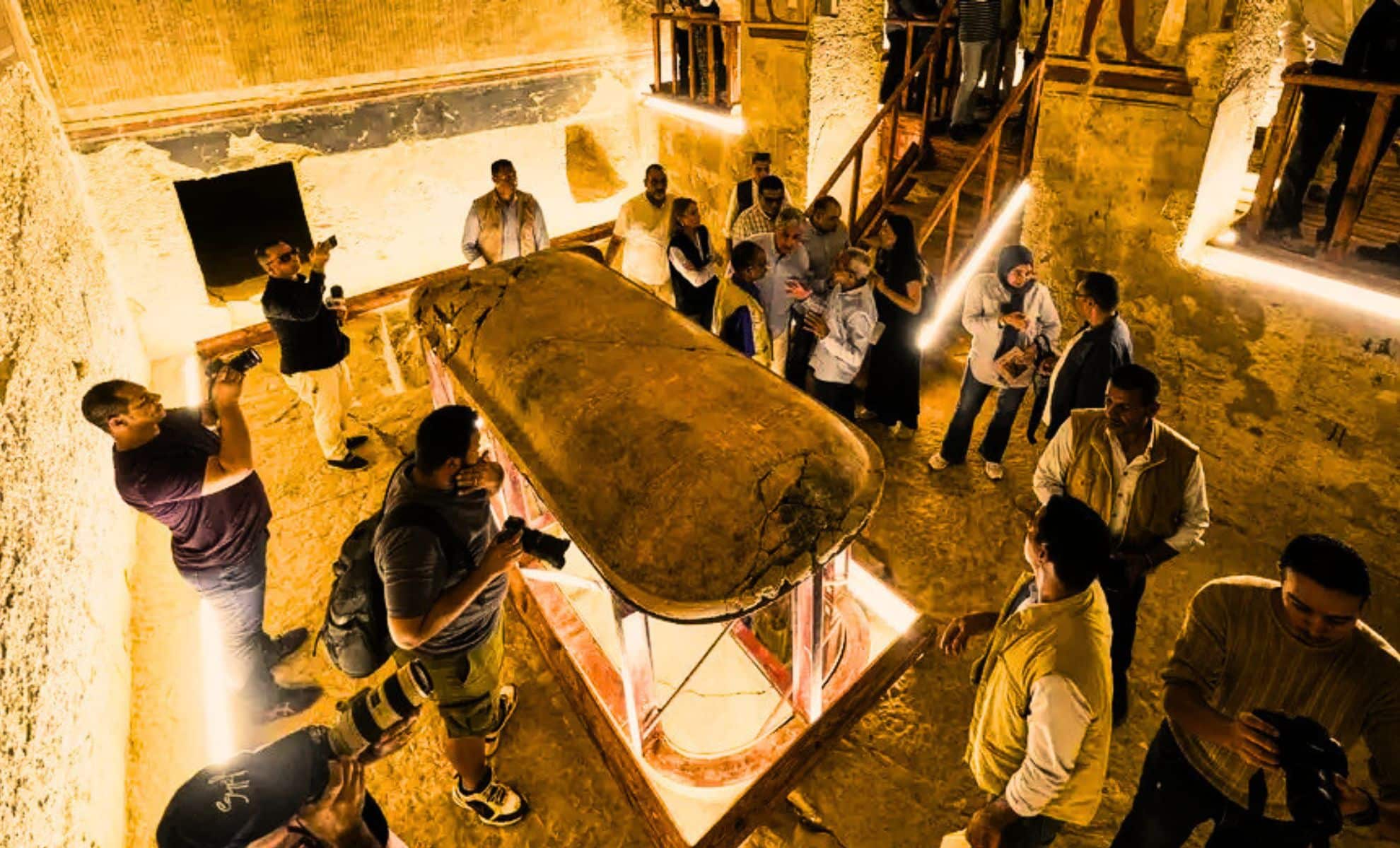
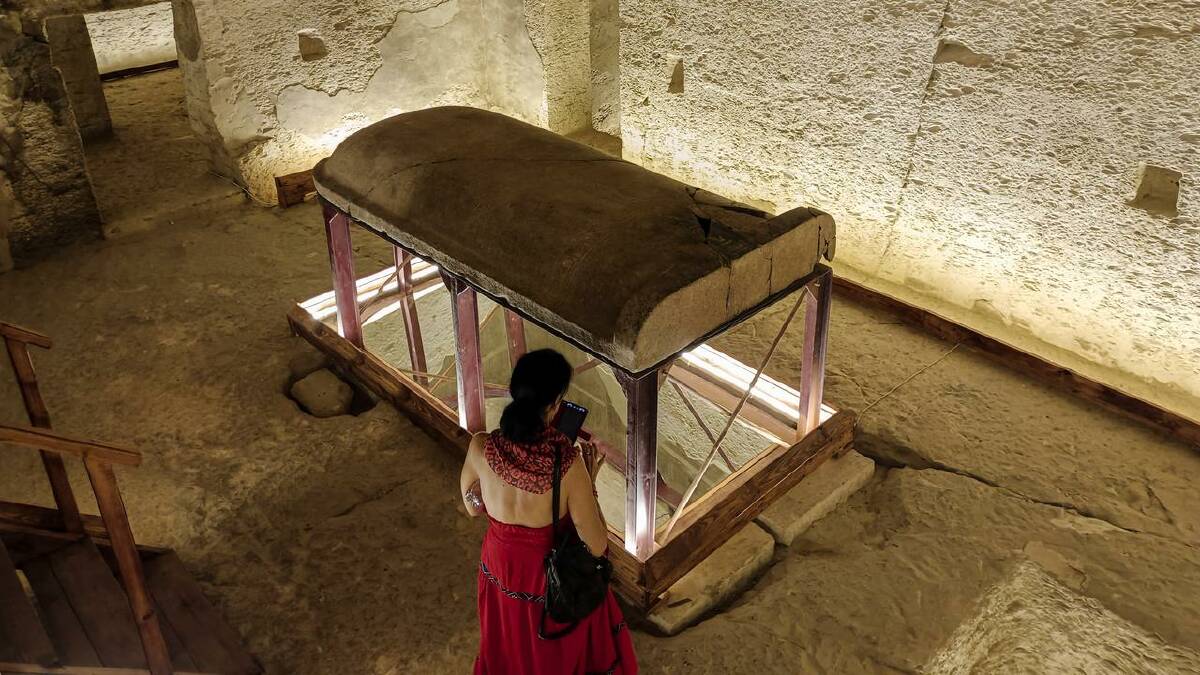
For twenty years, the tomb of one of Egypt’s most powerful pharaohs sat closed behind scaffolding while a Japanese-Egyptian conservation team pieced together more than 200 shattered fragments of his red granite sarcophagus lid. On October 4, 2025, the work was finished, and WV22 reopened to the public for the first time in a generation — one of the largest tombs in the Valley of the Kings, and one of the last major sites in Luxor to come back online after the pandemic-era slowdown in restoration work.
Amenhotep III: Pharaoh of Egypt’s Golden Age
Amenhotep III ruled Egypt from around 1390 to 1353 BCE, a nearly 38-year reign often described as the high point of the New Kingdom. Rather than campaigning, he built: temples, palaces, and statuary on a scale that outdid his predecessors, including his own mortuary temple at Kom el-Hetan — once the largest religious structure in Egypt — and the sprawling palace complex at Malkata. He secured peace through marriage alliances with foreign princesses rather than warfare. For the fuller picture of his building projects and reign, see our Amenhotep III biography; this page focuses on his tomb.

Inside the Tomb: A Bent-Axis Design
WV22 sits in the Western Valley, a quieter, less-visited branch of the Valley of the Kings roughly two kilometers from its entrance. Unlike most royal tombs, which are cut directly into the cliff base, WV22 was carved into the talus slope away from it — a structural choice that may explain some of the flood damage it later suffered.
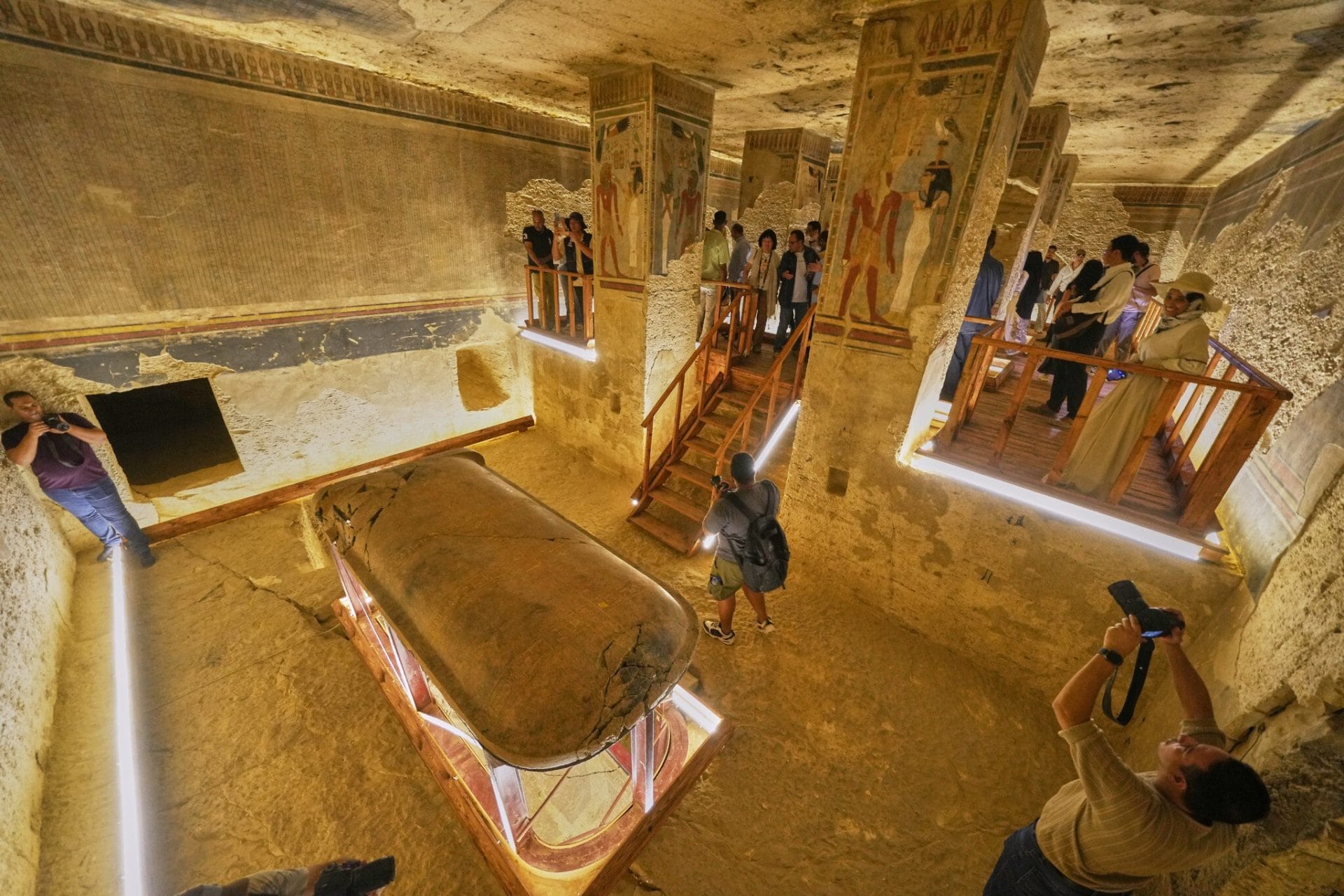
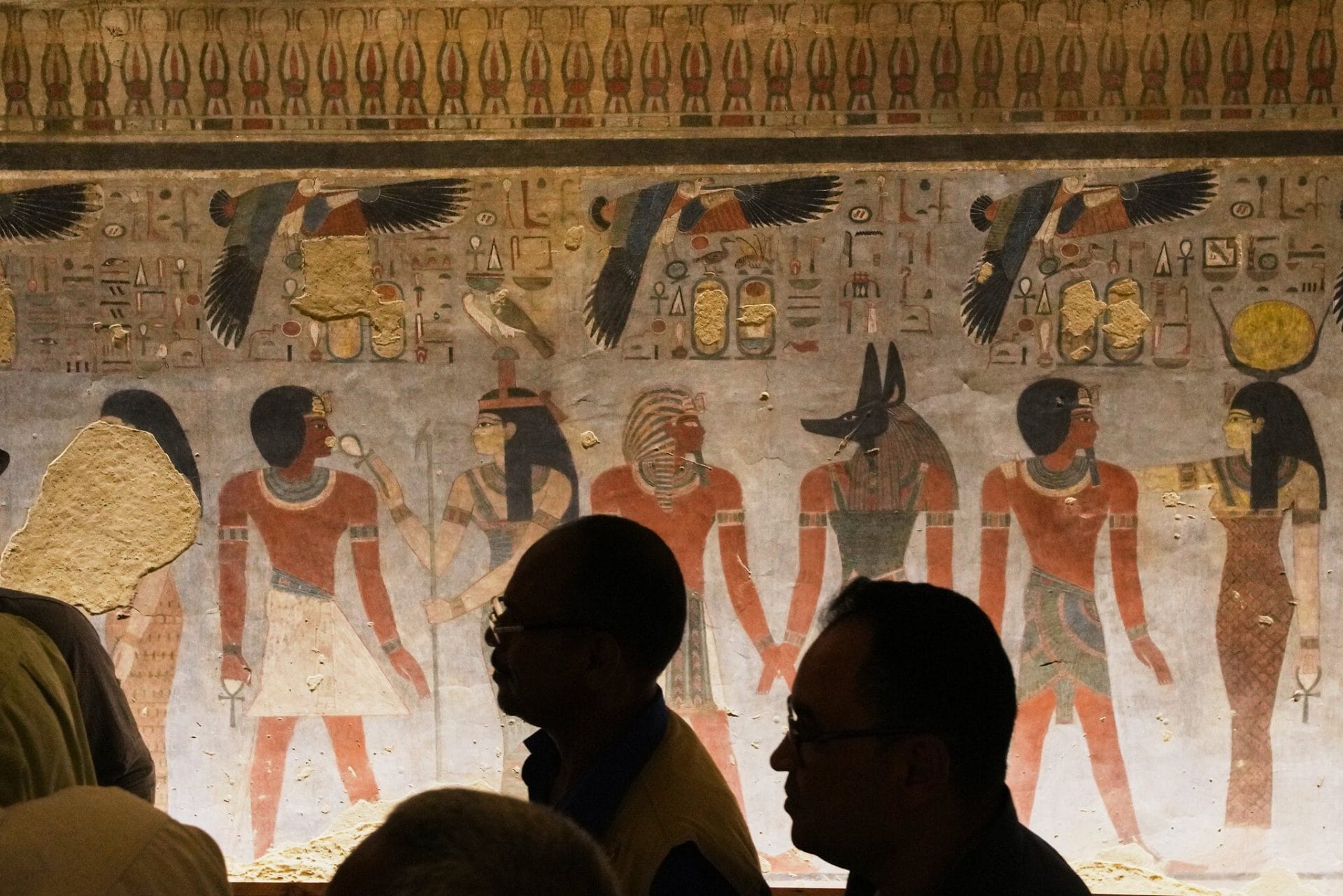
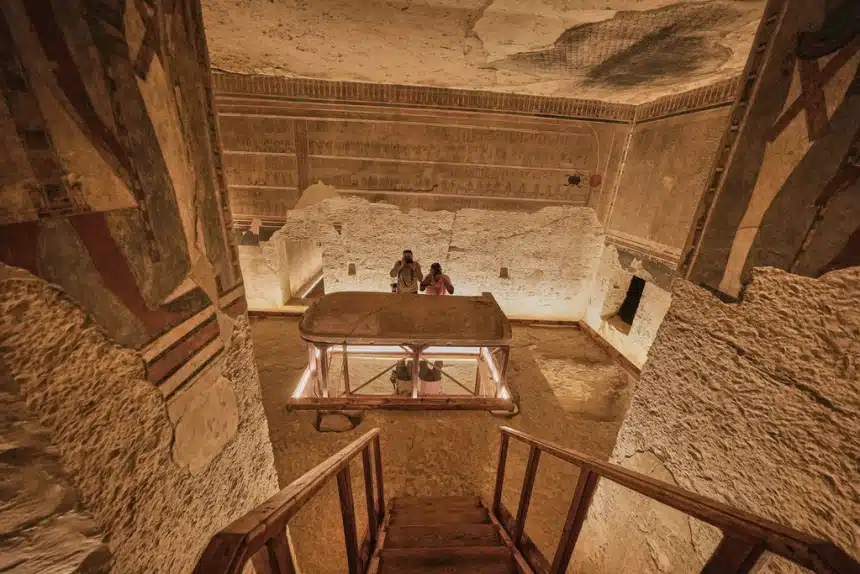
The tomb follows a bent-axis layout: a series of twisting corridors and chambers, more than 30 meters deep, leading to the burial chamber. What sets it apart is a pair of subsidiary burial chambers built for Queen Tiye and for Sitamun, Amenhotep III’s daughter, who was later elevated to the status of Great Royal Wife in his final years. The walls carry scenes from the Amduat and the Book of the Dead, guiding the king through the afterlife, and the burial chamber still holds the reassembled frame of his sarcophagus. In 1828, Jean-François Champollion’s expedition visited and removed several carved images of the pharaoh’s head from the tomb; they’re now in the Louvre.
A Twenty-Year Restoration
Japan’s Waseda University began surveying WV22 in 1989, after decades of flood damage, looting, and the darkening of its murals from bat activity and humidity. The dedicated restoration project that followed ran in phases over the next two decades, ultimately drawing in more than 260 conservators, archaeologists, and technicians from Japan, Egypt, and UNESCO. Their work included cleaning and stabilizing the wall paintings, securing the tomb’s structure, and reassembling the sarcophagus lid from over 200 fragments — a puzzle piece by piece.
The reopening ceremony on October 4, 2025, drew Egyptian officials and international dignitaries, and landed just weeks ahead of the Grand Egyptian Museum‘s own long-awaited opening on November 1, 2025 — two milestones in the same push to put Luxor and Giza back at the center of Egypt’s tourism recovery.
Where Is Amenhotep III’s Mummy?
It isn’t in WV22. To protect it from tomb robbers in antiquity, priests moved his body into the tomb of his grandfather, Amenhotep II — where it was later found among the cache of royal mummies hidden there. That relocation was common practice during periods when the Valley of the Kings’ tombs were being systematically emptied for safekeeping, and it means a visit to WV22 is about the architecture and afterlife imagery the king commissioned, not a chance to see him.
Visiting WV22
Access remains genuinely restricted, and this is the one area where solid, official information is thin. As of the most recent reporting available, entry required a special permit for groups of up to 25 people, with a group fee reported by some Luxor travel sources at roughly EGP 45,000 (about €815, or €33 per person in a full group) — though this figure couldn’t be confirmed against an official government page, and pricing for a newly reopened site like this tends to shift in its first year or two. Before planning around any specific number, check current terms through our ticket offices guide or directly with a licensed Luxor tour operator.
