Temple of Khnum
temple of Esna
When people think of Egypt, they often picture the famous temples of Karnak, the impressive sites of Luxor, or the giant statues of Abu Simbel. However, just 55 kilometers south of Luxor, there is a smaller but equally remarkable site: the Temple of Khnum at Esna. This temple, dedicated to the ram-headed god of creation, showcases the artistic and symbolic achievements of Ptolemaic and Roman Egypt.
For many years, much of the temple was buried under the town of Esna. Today, thanks to ongoing restoration efforts, its bright colors and detailed reliefs are coming back to life. Visitors can now enjoy a closer look at Egypt’s rich spiritual and artistic heritage.

Who Was Khnum? The Ram-Headed Creator God
To understand the temple, you first need to know about its main god, Khnum. Khnum is one of Egypt’s oldest gods, worshipped since the Early Dynastic period. He has the head of a ram, which represents fertility and strength.
Khnum is the creator of life. People believed he shaped humans on a potter’s wheel, using clay from the Nile, and then breathed life into them. He also oversaw the Nile, controlling its annual floods to ensure that crops grew well in Egypt.
Khnum had divine wives named Menhit and Nebtu, and his child, Heka, represents magic. This combination of being a cosmic creator and earthly provider made Khnum very important in Egyptian religion. The temple at Esna was not just a place to worship; it symbolized a workshop of creation where divine skill and human devotion came together.
Luxor Tours & Activities
Looking to save some costs on your travel? Why not join a shared group tour to explore Luxor, Egypt? Here are some activities you might be interested in:
The Location of Temple of Khnum
The History of the Temple of Khnum at Esna
Esna, known in ancient times as Latopolis, was an important religious and trade center. Earlier temples for Khnum likely existed here during the New Kingdom, but the temple we see today was mostly built during the Ptolemaic and Roman periods, from the 3rd century BCE to the 3rd century CE.
Construction of the temple began under Ptolemy VI and continued with later rulers. Roman emperors like Claudius, Vespasian, and Decius added decorations and inscriptions, mixing traditional Egyptian style with Greco-Roman design.
For many years, the temple held rituals related to the flooding of the Nile, fertility festivals, and offerings to Khnum and his family.
One interesting detail from the inscriptions is the cleanliness rules for priests. They had to shave their entire bodies every day, avoid certain foods like fish and beans, and wear only linen clothes before entering the sanctuary. These rules show the importance of Khnum’s temple and the seriousness of its rituals.

Architectural Highlights: Columns, Ceilings, and Cosmic Reliefs
When you enter the hypostyle hall, the only remaining part of the Temple of Khnum, you can see why it is so fascinating.
The hall has 24 large columns, each nearly 13 meters tall. The tops of the columns have unique carvings of flowers, including lotus, papyrus, palm, and grape vines. No two columns are identical, representing the rich abundance of Egypt.
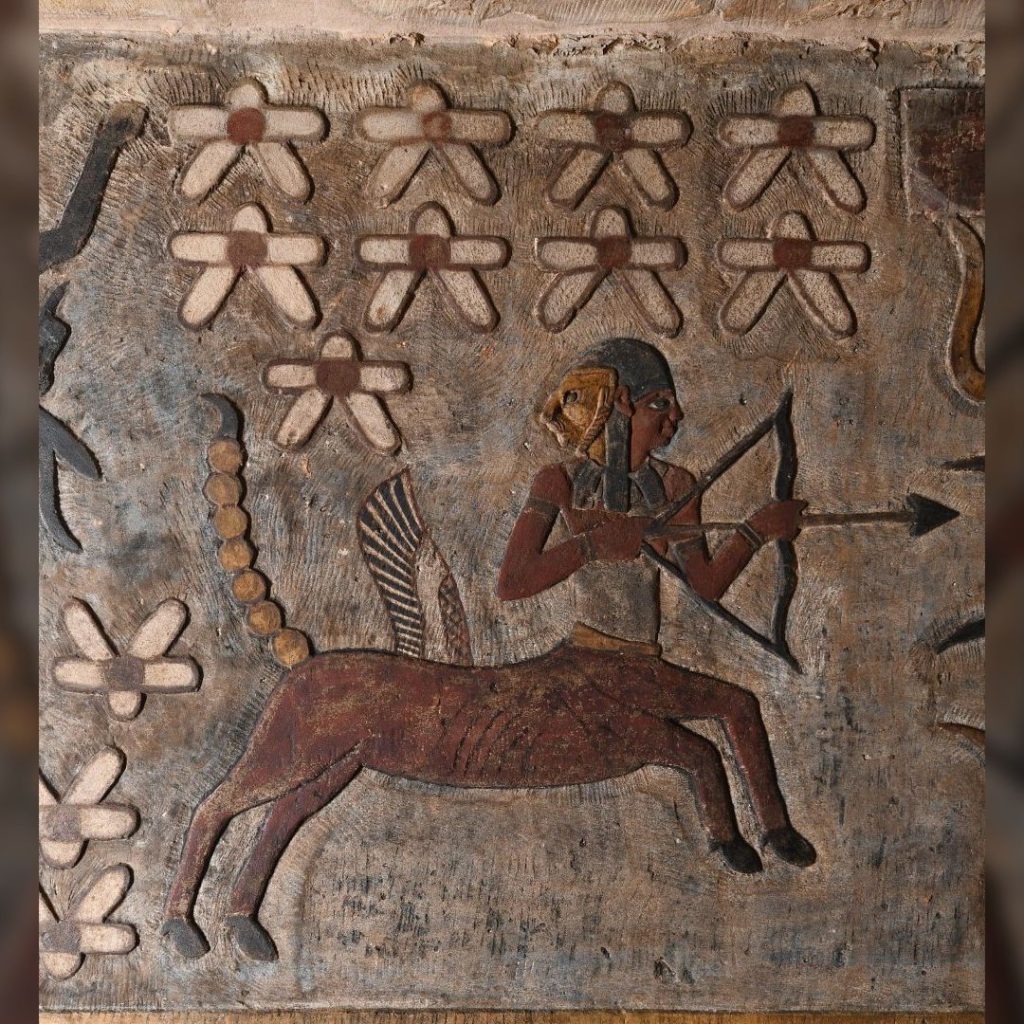
The ceiling features decorations of zodiac signs, stars, and cosmic deities. Recent cleaning has uncovered bright blues and yellows, turning the once-dark ceiling into a stunning celestial map.
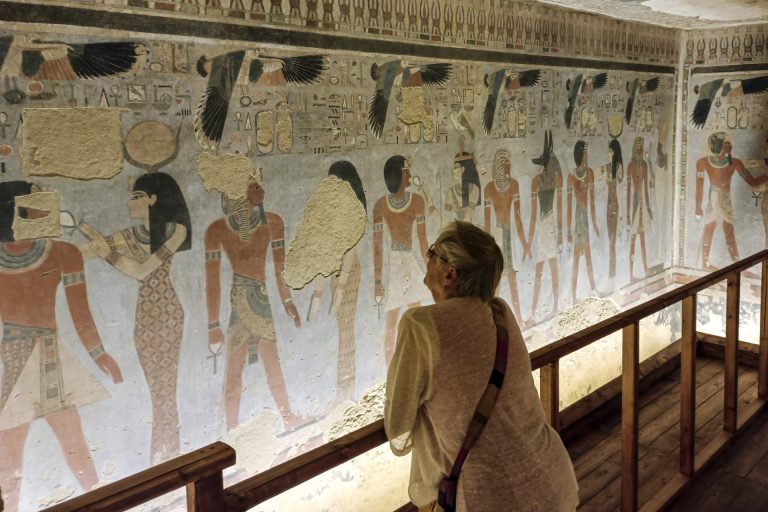
The walls are adorned with detailed scenes of pharaohs and emperors making offerings to Khnum, Menhit, Nebtu, and Heka. One inscription, from 250 CE under Emperor Decius, is the last known use of hieroglyphs in Egypt, marking the end of this ancient writing system.
The artwork in this hall is more than just decorative; it carries deep meaning. Each column, star, and hieroglyph highlights Khnum’s role as the giver of life and the cosmic craftsman.
Symbolism and Religious Significance
The temple’s design is steeped in symbolism:
- Floral capitals – Represent fertility, abundance, and the Nile’s life-giving power.
- Astronomical ceiling – Connects earthly rituals with the heavens, emphasizing Khnum’s cosmic role.
- Ritual scenes – Depict offerings that ensured the Nile’s proper flooding, a matter of survival for ancient Egyptians.
Festivals once held here celebrated rebirth, fertility, and the eternal cycle of creation. For worshippers, entering the temple was like stepping into the very workshop of the divine potter.

Rediscovery and Preservation
By the 19th century, much of the temple was buried under the modern town of Esna, leaving only the hypostyle hall visible. This area had dark reliefs due to years of soot and neglect.
Recent cleaning projects, led by the American Research Center in Egypt (ARCE) with the help of Egypt’s Ministry of Tourism and Antiquities, have improved the site. The cleaning has uncovered:
– Bright original colors: Vivid blues, reds, and yellows now shine again, especially on the astronomical ceiling.
– Hidden inscriptions: Texts and figures that were obscured for centuries are now clear, providing new insights into Ptolemaic and Roman religious practices.
– Restored atmosphere: Visitors can now see the temple as it once was: vibrant, colorful, and full of symbolism.
These restorations show us that ancient Egypt was not just about bare stone; it was a place of bright colors and artistry.

Visiting the Temple of Khnum Today
For modern travelers, the Temple of Khnum is both accessible and rewarding.
- Location – In the heart of Esna, about 55 km south of Luxor, on the west bank of the Nile.
- How to get there – Most visitors arrive via Nile cruise between Luxor and Aswan, but it’s also reachable by road.
- Opening hours – (Saturday – Monday – Wednesday – Thursday.
- Summer Working Hours: from 07:00 am to 4:00 pm.
- Winter Working Hours: from 07:00 am to 4:00 pm.
- Ramadan Working Hours: from 07:00 am to 4:00 pm.
- (Sunday – Tuesday – Friday): from 07:00 am to 06:00 pm
- Tickets – Adult EGP 200 – Student EGP 100
- Best time to visit – Early morning or late afternoon, when the light enhances the reliefs and the crowds are thinner.
Insider tips:
- Combine your visit with nearby sites like Edfu or Dendera for a fuller picture of Ptolemaic temple architecture.
- Take time to study the ceiling—binoculars or a zoom lens can help you appreciate the details.
- If you’re a photographer, the interplay of light and shadow on the columns is magical.
Esna Beyond the Temple
Visiting Esna is enjoyable because the temple is located in a lively town. After exploring the hypostyle hall, you can:
– Walk through local markets where vendors sell spices, textiles, and traditional crafts.
– Watch boats go through the Esna Lock, an important point for Nile cruises.
– Experience the slower pace of life in a town that combines ancient heritage with modern living.
The mix of the ancient temple and the vibrant community makes Esna a great stop on any journey along the Nile.

Why Esna’s Temple of Khnum Is a Must-See
The Temple of Khnum at Esna may not be as big as Karnak, but it offers something just as valuable: a personal experience, great art, and a strong link to Egypt’s spiritual core. In this temple, with its tall columns and ceilings decorated with stars, you can feel the presence of Khnum—the god who shapes life.
For travelers who want more than just the well-known sites of Egypt, Esna is a true discovery. It reminds us that Egypt’s wonders are not only at the most famous monuments, but are also hidden along the Nile, waiting to be found.
So, when planning your trip through Upper Egypt, make sure to include Esna. Visit the Temple of Khnum, look up at the beautiful painted ceilings, and think about the hands of the god that formed humanity from clay. Few places connect you to the ancient Egyptian belief system like this remarkable temple does.
Got a Question?
F.A.Qs
Ptolemy VI Philometor
The construction of the Temple of Khnum at Esna began in the 3rd century BCE during the reign of Ptolemy VI Philometor.
Temple of Khnum constructed between 237 and 57 BC during the Ptolemaic period, is one of the most well-preserved ancient monuments in Egypt.
Absolutely. While smaller, it offers a more intimate experience and unique features like the astronomical ceiling.
Around 45 minutes to an hour is sufficient, though enthusiasts may linger longer.
Yes—thanks to recent restoration, vibrant pigments are visible on the ceiling and reliefs.
Yes, though flash is usually prohibited to protect the artwork.
Did you know that
By purchasing through our links, you support us at no additional cost.
Thank you for your support. ♥️