Why Hatshepsut’s Temple Wasn’t a Copy of Mentuhotep’s
Hatshepsut vs. Mentuhotep
Standing before the cliffs of Deir el-Bahari in Luxor, you see two temples facing each other across time. One is Mentuhotep II’s, the Middle Kingdom pharaoh who brought Egypt together after a period of chaos. The other, much larger, is Hatshepsut’s temple. At first, it seems like she copied his design. However, the truth is more interesting. Her temple was not an imitation but a response. By building on the same sacred ground, she respected his legacy while also claiming her own divine right to rule. This wasn’t copying—it was a bold statement carved in stone.
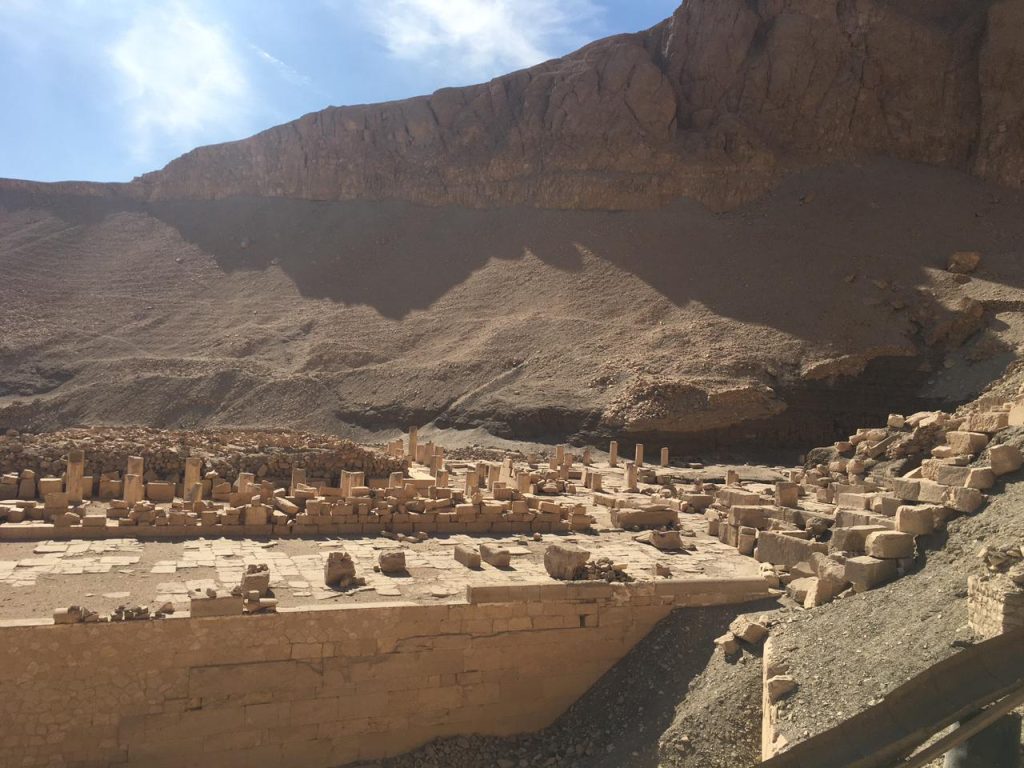
Mentuhotep II: The Innovator of Deir el-Bahari
Mentuhotep II ruled from about 2061 to 2010 BCE and ended Egypt’s First Intermediate Period, a time of disunity and chaos. His main achievement was the reunification of Egypt and the establishment of the Middle Kingdom. To celebrate this success, he built a mortuary temple at Deir el-Bahari, a sacred place on the west bank of the Nile.
Key features of Mentuhotep’s temple included:
– Terraced design: The rising platforms symbolized ascent and rebirth.
– Integration with cliffs: The temple blended with the natural landscape, highlighting harmony between people and nature.
– Religious symbolism: The temple showed Mentuhotep as chosen by the gods to bring back order.
This temple was groundbreaking. It moved away from the Old Kingdom’s pyramid styles and introduced a new architectural style that inspired later rulers, including Hatshepsut.
Luxor Tours & Activities
Looking to save some costs on your travel? Why not join a shared group tour to explore Luxor, Egypt? Here are some activities you might be interested in:
Hatshepsut: The Visionary Queen
Fast forward nearly 500 years to the 15th century BCE. Hatshepsut became pharaoh during the New Kingdom, making her one of the few women to hold this position in ancient Egypt. Her reign was marked by its wealth, extensive trading voyages, and impressive building projects. She had her mortuary temple built at Deir el-Bahari, designed by her trusted architect Senenmut.
Key features of Hatshepsut’s temple included:
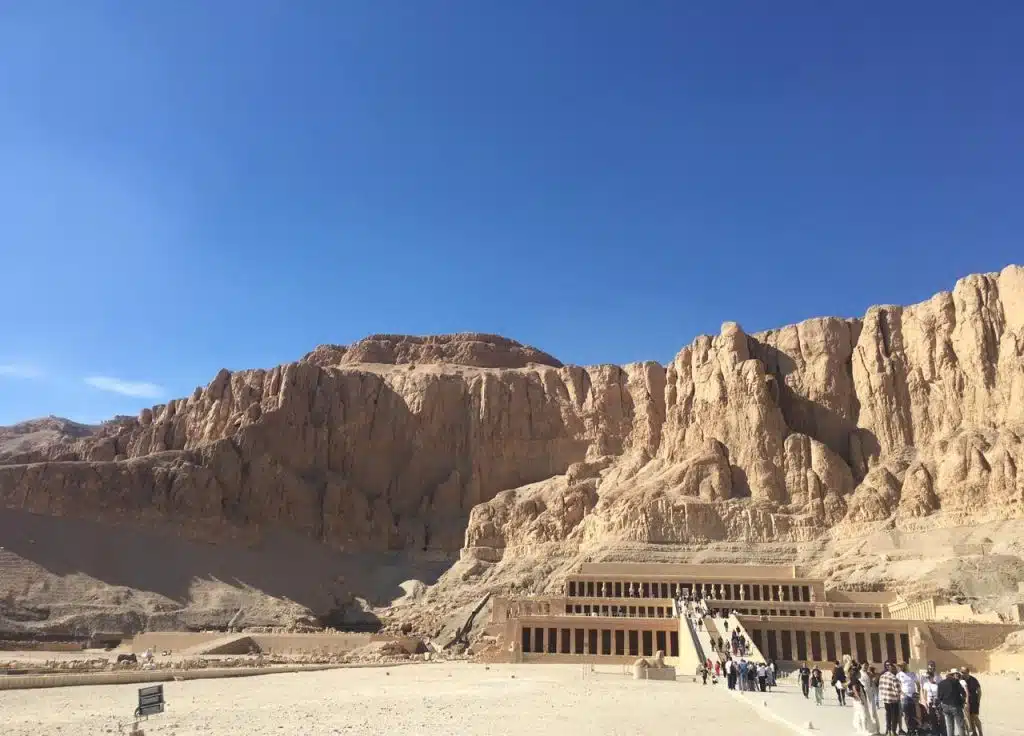
– Grand terraces: Large platforms showed off size and symmetry.
– Axial alignment: The temple’s central line pointed directly to the Temple of Karnak across the Nile, connecting her to Amun, the main god.
– Narrative reliefs: The walls showed her divine birth, her journey to Punt, and her legitimacy as pharaoh.
Hatshepsut’s temple was not just a burial site—it was a statement of her reign, asserting her divine right and her unique role as a female king.

Copy or Conversation? Architectural Dialogue
The two temples at Deir el-Bahari are similar but show different purposes. Both feature terraces and columns, blending seamlessly into the surrounding cliffs. However, their differences highlight their goals. Mentuhotep’s temple aimed to unify Egypt and show divine right in a divided country. In contrast, Hatshepsut’s temple emphasized continuity, grandeur, and new religious ideas.
Mentuhotep’s message was: “I restored Egypt; I am the divine unifier.” Hatshepsut responded: “Amun chooses me; my reign expands Egypt’s horizons.”
Hatshepsut’s temple was bigger, more detailed, and had a stronger message. By building her temple at the same site, she recognized Mentuhotep’s influence but also surpassed it, presenting her own vision of kingship.

Symbolism and Ideology
The conversation between the two temples is important:
Mentuhotep’s temple focused on rebirth, unity, and the concept of a divine king following periods of chaos.
Hatshepsut’s temple highlighted her divine birth, her role as the chosen one of Amun, and her legitimacy as a female pharaoh.
Hatshepsut redefined kingship. While Mentuhotep’s temple stressed restoration, her temple emphasized the continuation and growth of divine power.
The reliefs of her expedition to Punt showed her ability to bring wealth and prosperity to Egypt, which strengthened her claim to the throne.

Legacy of Deir el-Bahari
The connection between Mentuhotep and Hatshepsut created an important legacy:
Architectural influence: Hatshepsut’s temple served as a model for later mortuary temples in the New Kingdom.
Cultural meaning: The site shows how Egypt’s idea of kingship changed over time, from reunification to divine continuity.
Modern significance: Today, Deir el-Bahari is a key attraction in Luxor, bringing in visitors who engage with this ancient history.
The temples stand next to each other, not as copies, but as different voices in a conversation—two leaders discussing legitimacy, divinity, and what it means to be a king.
Why It Matters
To say that Hatshepsut’s temple is just a copy of Mentuhotep’s overlooks her creativity. She chose Deir el-Bahari to connect with Mentuhotep’s legacy, but her temple was a response, not a replica. It declared her divine birth, her right to rule as pharaoh, and her part in Egypt’s success.
Understanding this connection helps us better appreciate Egyptian history. The temples at Deir el-Bahari remind us that monuments are not fixed—they represent conversations across time. Hatshepsut didn’t copy Mentuhotep. She responded to him, and by doing so, she changed the meaning of kingship in ancient Egypt.
Got a Question?
F.A.Qs
Hatshepsut chose Deir el-Bahari to honor Amun and to place her monument beside Mentuhotep II’s temple. This location allowed her to engage with his legacy while asserting her own divine legitimacy and authority as pharaoh.
Mentuhotep’s temple symbolized reunification and rebirth after Egypt’s fragmentation, while Hatshepsut’s temple emphasized divine birth, prosperity, and her unique role as a female king. Architecturally, Hatshepsut’s temple was larger, more symmetrical, and aligned with Karnak across the Nile.
No. While both temples share terraces and integration with the cliffs, Hatshepsut’s temple was a deliberate response, not a copy. It expanded the architectural language and reframed kingship for the New Kingdom.
Senenmut, Hatshepsut’s trusted architect, designed the temple with grand terraces, axial alignment, and narrative reliefs. His vision helped transform the site into one of Egypt’s most iconic monuments.
Her temple depicts her divine birth, expedition to Punt, and close relationship with Amun. These reliefs reinforced her legitimacy and presented her reign as divinely sanctioned and prosperous.
Deir el-Bahari is a UNESCO World Heritage site and one of Luxor’s most visited attractions. It offers insight into Egypt’s evolving vision of kingship and remains a stunning example of ancient architecture.
Hatshepsut’s temple influenced later New Kingdom mortuary temples and reshaped how rulers expressed divine legitimacy. It stands as a testament to her boldness and vision as one of Egypt’s greatest pharaohs.
Did you know that
By purchasing through our links, you support us at no additional cost.
Thank you for your support. ♥️